Culture & ingredient sourcing
Review probiotic strains, fermentation media, carriers and capsule materials. Request supplier evidence for ingredients requiring Halal verification.
Halal Probiotic OEM Malaysia · Private Label
Planning Private Label Halal Probiotics? Discuss your preferred strains, product format, target market and Halal requirements with MM Cosmetic. Confirm manufacturing capabilities and certification scope for ingestible products before proceeding.
From cultures to finished packs
Halal probiotic projects depend on documented culture origins, suitable production controls and stability through the intended shelf life. Assess these requirements alongside the exact certification and regulatory route.
Review probiotic strains, fermentation media, carriers and capsule materials. Request supplier evidence for ingredients requiring Halal verification.
Specify the intended CFU count at the end of shelf life, appropriate moisture protection, storage conditions and suitable pack formats.
Confirm the facility is authorised for the proposed ingestible format, then review product classification, testing, Halal evidence and permissible label claims.
Choose your probiotic format
Explore possible formats for Private Label Halal Probiotics. The best choice depends on strain viability, delivery method, packaging and whether the final product is classified as a food or health supplement in Malaysia.
Discuss capsule shells, strain combinations, proposed daily serving and moisture-resistant bottle or blister packaging.
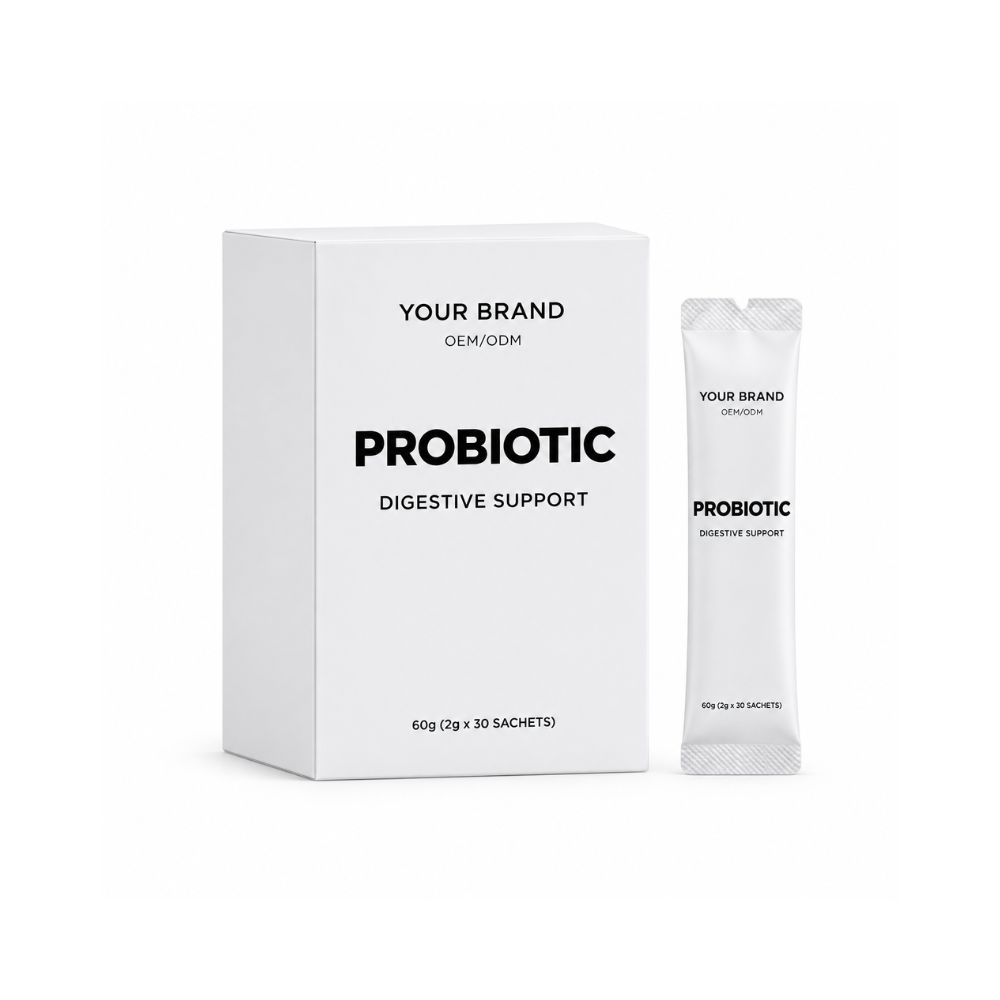
Consider single-serve sachets with suitable carriers, flavour options and protection against humidity during storage.
Review whether selected strains can remain viable in a chewable format, alongside gelling agents and ingredient documentation.
Explore liquid concepts only where strain stability, processing, shelf life and suitable storage conditions can be demonstrated.
Formats shown are development concepts, not confirmed manufacturing offerings or Halal-certified products. Verify feasibility, production scope, stability and certification for the final formula.
From concept to product brief
Share your intended probiotic format, strains, target audience, sales markets and packaging preferences. Establish the correct manufacturing arrangement, regulatory classification and Halal evidence before finalising the formula.
Specify the format, proposed strains, intended market, serving size and branding requirements.
Request strain identities, culture and media documentation, excipient records and supplier certification details.
Assess manufacturability, packaging, storage conditions and viable counts across the proposed shelf life.
Determine food-versus-supplement classification, approvals, permitted claims and product-level Halal eligibility before production.
Verify before launch
Probiotic supplements are ingestible products. Confirm the correct manufacturing approvals, product category and Halal status rather than relying on a cosmetic facility certificate.
MM Cosmetic describes a Halal-certified cosmetic facility, but that alone does not establish approval to manufacture ingestible probiotics. Verify the relevant site, licence and certification scope.
Check culture media, additives, capsule shells and processing materials. Use the Malaysian Halal logo only when the exact finished product has the required certification and approval.
Depending on formulation, presentation and claims, a probiotic may fall under NPRA health supplement regulation or food requirements. Determine the appropriate route before finalising artwork.
Frequently asked questions
Answers to common questions about strains, private label probiotic formats, Halal documentation and Malaysian compliance.
Review strain origin, fermentation and growth media, carriers, stabilisers and any animal-derived processing materials. Request supporting documentation from suppliers for the exact strains and finished formula.
Capsules, powder sachets, chewables and certain liquid concepts may be considered. Suitability depends on culture stability, packaging, storage conditions and the authorised manufacturing arrangement.
You can submit a probiotic product brief for a feasibility discussion. Before commissioning an ingestible product, confirm the available manufacturer or partner, its relevant licences, production capabilities and Halal certification scope.
No. A facility certificate or Halal-suitable ingredient does not automatically certify the finished probiotic. Confirm approval for the exact product, manufacturing site and packaging claim before using a Halal logo.
Provide any intended strain identities, target viable count in colony-forming units (CFU), serving size and shelf-life expectations. Stability and test requirements should be agreed with an appropriately qualified manufacturer.
MOQ and pricing vary by format, strain sourcing, packaging, stability requirements and production site. The starting quantity advertised for cosmetic projects should not be assumed to apply to probiotics; request a specific quotation.
It depends on how the product is formulated, presented and marketed. Some probiotics are regulated as health supplements by NPRA, while others fall under food rules. Confirm classification and any registration obligations before launch.
Timing depends on sourcing documented strains, testing viability, choosing packaging, confirming the manufacturing arrangement, classifying the product and completing any required Halal and regulatory approvals. Request a project-specific timeline.
Start with a clear product brief
Share your preferred probiotic format, strain details, packaging concept and intended market. Discuss feasibility, relevant manufacturing partners or facilities, documentation and the right compliance pathway for your brand.